A normal meal can become an airway emergency without warning.
Eating too fast, food getting stuck in the throat, an elderly person struggling to swallow, a child running while eating, or suddenly choking when home alone…
These situations may seem far from everyday life, but when they do happen, you often have only a few seconds to react.
Choking Is Silent. Deadly. And More Common Than You Think.
When seconds matter, most people are unprepared.
Every year, thousands of families experience the unthinkable — a loved one suddenly choking, gasping for air, with no immediate solution at hand.
Most people do not realize how common choking emergencies can be.
- • Over 5,000 people in the U.S. die each year from choking.
- • Over 60% of choking deaths happen at home, often during everyday meals.
- • Most people forget basic choking first aid within 2 months of learning it.
- • The Heimlich manoeuvre isn’t always effective — especially when the person is alone, elderly, or physically limited.
For seniors, the risk is even higher due to weakened reflexes, dry mouth, dentures, dysphagia, or simply living alone.
According to the National Safety Council, choking is the 4th leading cause of unintentional death in older adults.
Most households, schools, and even public spaces are completely unprepared for choking emergencies.
The truth is, it only takes seconds for a life-threatening obstruction to block the airway.
WHY THE HEIMLICH MANEUVER CAN BE CHALLENGING FOR SENIORS?
Physical Considerations:
- May require significant upper-body strength from the rescuer
- It can be difficult for elderly spouses to perform effectively
- Requires proper positioning that isn't always possible
- May pose risks for individuals with fragile bones or certain medical conditions
Situational Challenges:
- Many seniors live alone with no one available to help
- Caregivers may be elderly themselves and face physical limitations
- Emergency responders may not arrive immediately
IMPORTANT NOTE: We strongly encourage everyone to learn proper first aid techniques, including the Heimlich maneuver. This anti-choking device is designed to complement, not replace, traditional first aid training.
When someone can’t breathe, panic is not a plan.
Choking can turn a normal meal into the scariest moment in the room. This handheld anti-choking device gives your home a simple, ready-to-use airway aid when food or an object blocks breathing.
Most homes are ready for cuts and bruises. Not blocked airways.
In a choking emergency, the person may not be able to speak, cough, or call for help. The people around them may freeze. And if the person is alone, every second feels even heavier.
That is why this device is built around one idea: make the response fast, physical, and easy to remember when stress is high.
Mealtime risk
Meat, bread, grapes, candy, and pills can become dangerous before anyone expects it.
Senior care
Swallowing trouble, dry mouth, dentures, or weaker coughing can make choking harder to handle.
Kids move fast
Children may eat while walking, laughing, talking, or playing — and panic quickly.
Home alone
The most frightening choking emergency is the one where nobody is nearby to help.
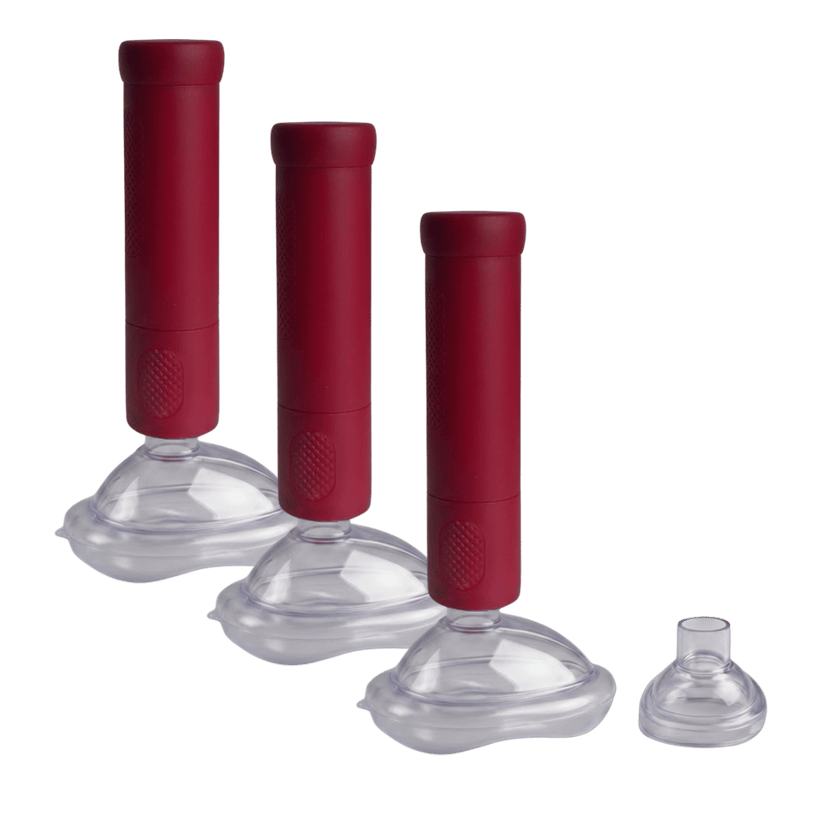
Clear mask. Red handle. Simple suction action.
The device uses a clear face mask to create a seal and an easy-grip red handle for the suction-based pulling motion. The design is intentionally simple, because an emergency is not the time for complicated setup.
Three movements you can remember: Place. Press. Pull.
The goal is to create a seal over the mouth and nose, press the handle down, then pull upward to create suction designed to help remove the blockage. The motion is short, direct, and easy to practice before you ever need it.
Place
Place the correct mask over the mouth and nose to create a secure seal.
Press
Press the handle down. The one-way valve design allows air to move out of the device.
Pull
Pull upward to create suction designed to help draw the obstruction out of the airway.
One kit for adult and child mask coverage.
Choking does not only happen to one age group. The included mask sizes make the device more practical for households with adults, kids, grandparents, and caregivers.
Keep it where food is actually served: the kitchen, dining room, breakfast bar, or any space where children and family members snack.
Built for the places choking actually happens.
This is not something to hide in the back of a closet. The point is to keep it close to real-life risk areas: meals, snacks, senior care, travel, and family spaces.
For seniors and caregivers
A simple handle-and-mask design makes it easier for caregivers to keep the device nearby for older family members who may have swallowing concerns.
For family spaces
Keep it visible and reachable in shared areas where children, parents, and grandparents spend time together.
For solo emergencies
If choking happens when no one is around, the device is designed so it can be held to your own face and pulled by yourself.
Small enough to keep where you can actually grab it.
Emergency tools are only useful when they are easy to reach. The compact design makes it practical to store in a bag, kitchen drawer, dining cabinet, car, travel kit, or caregiver bag.
Simple, practical, and made for emergency access.
The strongest selling point is not complexity. It is the fact that the device can be understood quickly, stored nearby, and used with a short physical action when panic is high.
One-way valve design
During the press step, air is designed to move out through the valve system instead of being forced downward.
Reusable after cleaning
After practice or use, clean the device and mask according to the included instructions and keep it ready again.
No complicated operation
The operating pattern is intentionally short and memorable: place, press, pull.
Preparation only works if the tool is easy to find.
Do not wait until an emergency to open the box for the first time. Read the instructions, test the hand motion, choose the right storage spot, and make sure the people in your home know where it is.
Quick readiness checklist
Important Safety Note
This product is an emergency airway aid. It should not replace certified first-aid training, CPR knowledge, emergency services, or professional medical care. In a serious choking emergency, call 911 or local emergency services as soon as possible and follow recognized first-aid guidance.